About this song
Run It Up Lyrics Meaning
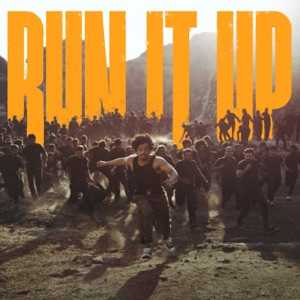
Run It Up is a captivating English song, brought to life by the artistic prowess of Hanumankind. The lyrics of the song are penned by Sai Nikhil Kalmireddy & Sooraj Cherukat, while the production credits go to Kalmi. Run It Up was released on March 6, 2025. “Run It Up Lyrics Meaning” has stayed with many, making it a song people naturally come back to again and again. Below, you’ll find the meaning of the lyrics for Hanumankind’s “Run It Up”, offering a glimpse into the profound artistry behind the song.
Listen to the complete track on Amazon Music
Choose your script
Read the Song Lyrics
Run it up, the sun is up
To when it’s down, get your money up
I put money down on all of us
On my people now, on what I love
Hanumankind opens with a declaration of work, purpose, and loyalty. “Run it up” is a call to rise—financially, emotionally, and culturally. It’s sunrise to sundown hustle, but not just for personal gain. He’s betting on his people, on his culture, on everything he loves. The repeated sun imagery isn’t only temporal—it symbolically ties to rebirth, light, and ancient Indian wisdom. When he vocalizes “the sun is up,” it even echoes “ni sa ni sa”—notes from Indian classical music. This blending of worlds—South Asian roots and global rap—becomes a mission statement: he’s bringing the East into a Western-dominated space and staking everything on its brilliance.
Ooh, baby, it’s dangerous
Your problems, they just not the same to us
We’re dealin’ with things you ain’t seen before
We’re feelin’ the weight of our ancestors
We’re healin’ with ways that don’t last for long
Don’t have us the time, ain’t it obvious?
No help for the weak, but the liquor strong
Plenty here, pour it for all of us
In this verse, Hanumankind speaks to those who’ve never lived his struggle. It’s a reminder that the issues faced by South Asians—especially in diaspora—are not just contemporary but historical. He refers to inherited trauma, the aftermath of colonial exploitation, racism, displacement, and generational pain. The healing mechanisms—alcohol, music, dance—are often temporary. There’s no real rest, no outside help. “Pour it for all of us” becomes both a gesture of unity and survival—whether honoring the lost or bonding over shared hardship. It’s also a quiet critique: the liquor is strong, because the support system is weak. It echoes the sad irony that escapism is offered more readily than empowerment.
Now bring out the drums in this bitch
All my homies got rich doing shit that they said wouldn’t work
Bring out the guns in the bitch, here to load up a clip
And go shoot up the place, we don’t care (brrt)
This moment explodes with cultural fire. “Bring out the drums” isn’t just sonic hype—it’s ancestral. The chenda, a traditional drum from Kerala, is part of Hanumankind’s roots. Its inclusion here signals power, celebration, and the readiness to battle for identity. His friends got rich by being unapologetically themselves—by doing what was once dismissed. The loaded clip isn’t just literal—it’s metaphor for readiness to fight for space in industries that historically gatekeep against people like him. This isn’t violence—it’s loud, radical assertion. They don’t care about fitting in—they’ve carved their own lane.
I see the bums that be wishing we end in a ditch
Yeah, they’re prayin’ to see a man hurt
I see the love that we give and the love that we get
Make sure everything comin’ full circle (whoo)
Here, Hanumankind addresses both hate and reciprocity. There are people who want to see him fail, people who have internalized colonial systems and project harm on those rising from the margins. But instead of bitterness, he talks about love—what is given and what is returned. He’s trusting the cycle of karma, of justice, of community. “Full circle” reflects Eastern philosophical thinking—what you put into the world comes back. It’s both spiritual and social.
We went from nothin’ to something
Got all of ’em jumpin’ to shit that we made from the air
We went from running and gunning with nothing in stomach
To feeding the neighborhood, bruh
This is rags-to-respect. He charts the journey from scarcity to abundance—not just for himself, but for his people. These aren’t metaphors. He’s talking about real hunger, real risk, real hustling. “Made from the air” shows how they created art, joy, and success out of what seemed like nothing—no resources, no industry support, no inherited privilege. Now, he feeds the neighborhood—literally and symbolically. He’s become the provider, the voice, the role model.
There ain’t a person alive that be matching the vibe
And it honestly ain’t even fair (whoo, whoo)
There ain’t a dude with the drive and the vision like I have
Unless I go look in the mirror, baby
With confidence rooted in struggle, he asserts that his path, energy, and drive are unique. Not as arrogance, but as truth—he is not trying to imitate, he is originating. The only one who can match him is his own reflection. This is the power of self-awareness, of finding purpose through adversity. It’s a flex, but it’s earned.
So run it up, the sun is up
To when it’s down, get your money up
I put money down on all of us
On my people now, on what I love
This chorus returns as a mantra. It’s not just a hook—it’s a lifestyle. It says: keep working, keep believing, keep betting on your community. He affirms again—his success is not individual, it’s collective. His love includes history, family, identity, and hope.
Ooh, baby, we run it up
Get it the minute, the sun is up (whoo, whoo)
There is no resting when sun is down (whoo, whoo)
Work it for real, get your money up (whoo, whoo)
Believe it on God, put money down (whoo, whoo)
I’m bettin’ the odds on all of us (whoo, whoo)
I do it for all of my people now (whoo, whoo)
Put that on everything that I love (whoo)
Church!
In these lines, the repetition is spiritual, almost like a prayer. He’s tying labor and belief, the physical and the sacred. He’s not just chasing money—he’s working toward justice, representation, and freedom. “Church!” is an exclamation of conviction, not religion. It’s reverence for what he stands for. The music video supports this—art forms from every region in India flash across the screen, turning the visuals into a moving altar of pan-Indian culture.
Yeah, on everything that I love (ah!)
Yeah, yeah, ain’t nothing that come above (yeah)
Hu, hu
Yeah, three, two, one (hu)
As the energy dips, the conch shell—shankh—enters. Its sound in Hindu tradition is sacred, signaling divine beginnings and cosmic power. It was used in ancient Indian wars to announce battle, but here, it’s repurposed for spiritual battle. It purifies, protects, and awakens. This isn’t just a song anymore—it’s a ritual.
Now, we go from angry and mad to happy and glad to find a solution for us (hu)
We go from sorry and sad to ready to grab our weapons and get to the front
I want the money, the cash, the moola, the bag, the currency, stacking it up (yeah)
We want the freedom to live and the freedom to have the things we been lackin’, my bruh
This is evolution. From anger to hope, from sadness to strategy. He isn’t glorifying violence—he’s showing the emotional progression of a generation tired of being told to wait. He wants not just income, but freedom. Freedom to exist without apology, to create without compromise, to live without fear. It’s deeply political, but also deeply human.
So what are we lackin’? (Huh?)
I could point it out, so much that’s around, better settle down (whoo)
No point doing that, or they send the hounds (yeah)
Bite me in the ass, put me in the ground (ay)
Turn me into ash, culture carried down (ay)
Here, he touches on the consequences of speaking out. In countries where dissent can be criminalized, calling out injustice often leads to backlash. So, many are silenced. Yet he still speaks. “Turn me into ash” is about sacrifice and legacy. In Hinduism, cremation represents liberation of the soul. He ties it to myth, invoking how Hanuman once flew toward the sun and was burnt. Ashes carry memory. Culture survives through fire.
From those who came up before me (ay)
I’m here to change up the story (yeah)
Find me at work in the morning (yeah, yeah)
Find me where people are mourning, man (yeah)
He honors ancestors, freedom fighters, those erased from history. He wants to flip the narrative—no more silence, no more invisibility. He’s working in the daylight and showing up in places of loss, where his people still suffer. He wants to turn mourning into movement.
‘Cause death is around every corner (yeah)
When life isn’t free for a person, dawg
You act like an animal cornered
Savages speak in a language y’all
You don’t understand, you a foreigner
This verse strikes at colonial myth-making. Historically, colonizers labeled people of color as “savages” to justify control. Hanumankind reclaims that word—not as insult, but as power. When freedom is denied, people react like caged animals—not out of evil, but desperation. He flips “savage” to mean bold, unfiltered, brave. It’s a survival language, and if you’ve never lived it, you won’t understand.
Don’t nobody need an advantage, nah
We’re needin’ some balance and order
But you know that’s never the case
Never a chance that they’re changing their ways (no)
It’s never a choice that they’re giving to you
There will never be justice to face
We sing for the sorrow and dance for the pain (yeah)
No one to follow, it’s just you and me (yeah)
I swear that it’s coming, we’re starting today
But we wake up tomorrow and things are the same, damn (brrt)
Hanumankind closes with weary honesty. Marginalized communities don’t ask for handouts—just fairness. But history shows power rarely gives back. Justice, real justice, is constantly delayed. So instead, people make meaning through art. Dance becomes resistance. As in Indian classical forms like Bharatanatyam, Kathakali, Odissi, sorrow is expressed through movement. There are no saviors—just each other. He says change begins now, but the pain is that tomorrow may look no different. Still, he sings. Still, he moves. That’s the revolution.