
Lyrics & meaning
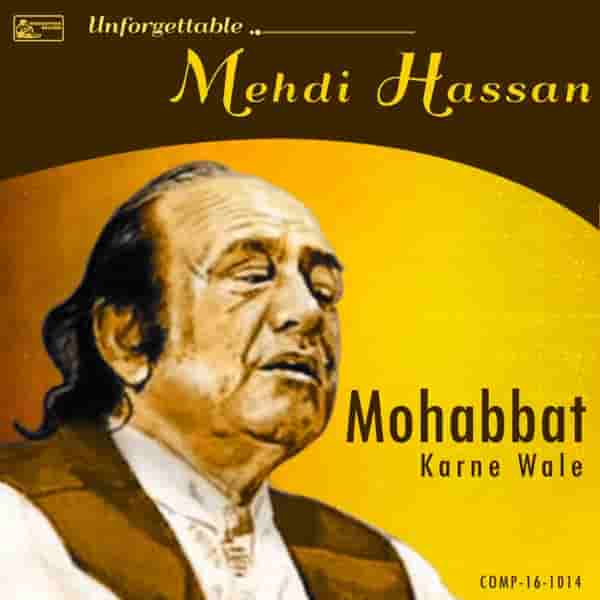
Mohabbat Karne Wale (Meaning)
Choose your script
Read the Song Lyrics
Mohabbat karne wale kam na honge
Teri mehfil mein lekin hum na honge
Hafeez is not denying love’s existence. He acknowledges that lovers will always surround his beloved. But what he mourns is his own absence. It’s not a complaint—it’s a quiet acceptance of a painful reality. Here, love is not about possession or reciprocation. It is about witnessing someone’s happiness, even if it means stepping away. There’s no bitterness, just a deep sigh of longing.
Main aksar sochta hoon phool kab tak
Shareek-e-girya-e-shabnam na honge
He wonders—how long can flowers remain untouched by sorrow? The flowers symbolize his beloved, while the dew represents his own tears. He sees himself weeping while she remains untouched, but he believes that even the most beautiful things must, one day, experience sorrow. Is this a hope? Or a subtle wish that she, too, understands his pain one day? Hafeez doesn’t say it outright, but the unspoken words hang in the air.
Zara der-aashna chashm-e-karam hai
Sitam hi ishq mein paiham na honge
For once, her gaze was soft—was that mercy? Was that love? He clings to that moment, no matter how brief. Hafeez suggests that love is not just a series of hardships. If love has the power to break, it also has the power to heal. Even a fleeting moment of kindness from the beloved can make a lover forget a lifetime of pain.
Dilon ki uljhanein badhti rahengi
Agar kuch mashvare baaham na honge
Love is complicated, but silence makes it unbearable. If lovers do not sit and talk, if they do not share their burdens, misunderstandings will only grow. Hafeez speaks like someone who has loved deeply and lost, realizing too late that unspoken words can destroy love more than betrayal ever could.
Zamaane-bhar ke gham ya ikk tera gham
Yeh gham hoga toh kitne gham na honge
There are many sorrows in the world, but losing the beloved overshadows them all. Hafeez does not deny the existence of other pains—he simply states that this one grief is so vast, it leaves no space for any other. This is a lover’s surrender—not to the beloved, but to his own heartbreak.
Kahun bedard kyun ahal-e-jahan ko?
Woh mere haal se mehram na honge
It is easy to call the world cruel, but why should they care? They do not know his sorrow. They have their own lives, their own worries. Hafeez understands that the world moves on, regardless of his grief. Complaining about its coldness is pointless. It is a realization that loneliness is not about being alone—it is about knowing that your pain is invisible to others.
Humaare dil mein sail-e-girya hoga
Agar baa-deeda-e-pur-nam na honge
If tears do not escape through his eyes, his heart will drown in sorrow. Suppressing emotions only makes the pain worse. This is Hafeez telling himself that grief must be released. Whether through tears or poetry, sorrow must find an outlet—otherwise, it consumes the soul.
Agar tu ittefaaqan mil bhi jaaye
Teri furkat ke sadme kam na honge
Even if he meets her again, will it undo the years of longing? Will it erase the sleepless nights and unanswered prayers? No. The pain of separation does not fade just because two lovers reunite. Some wounds never truly heal. This is not a hopeful verse. It is a statement of truth—some distances remain even when lovers are standing face to face.
‘Hafeez,’ unse main jitna bad-gumaan hoon
Woh mujhse uss qadar barham na honge
Hafeez admits he is filled with resentment, suspicion, and frustration toward his beloved. But she? She remains unaffected. She does not hold anger against him the way he holds it against her. Is this indifference? Or is it her ability to move on, while he remains trapped in the past? The ghazal ends on this note—not with closure, but with a realization: One heart still aches, while the other has already let go.
Hafeez Hoshiarpuri’s Ghazal Mohabbat Karne Wale is not dramatic, nor rebellious. It is the voice of a man who loved, suffered, and accepted his fate without complaint. His ghazal is not about demanding love, but about witnessing its absence. This is what makes his words timeless. We all, at some point, have been in a place where love remained, but we did not. Hafeez does not fight this truth—he merely writes it down, hoping that someone, somewhere, understands.